Speed to lead: how to call every new lead within a minute
Adoptiv Team··Updated ·4 min read
Short answer
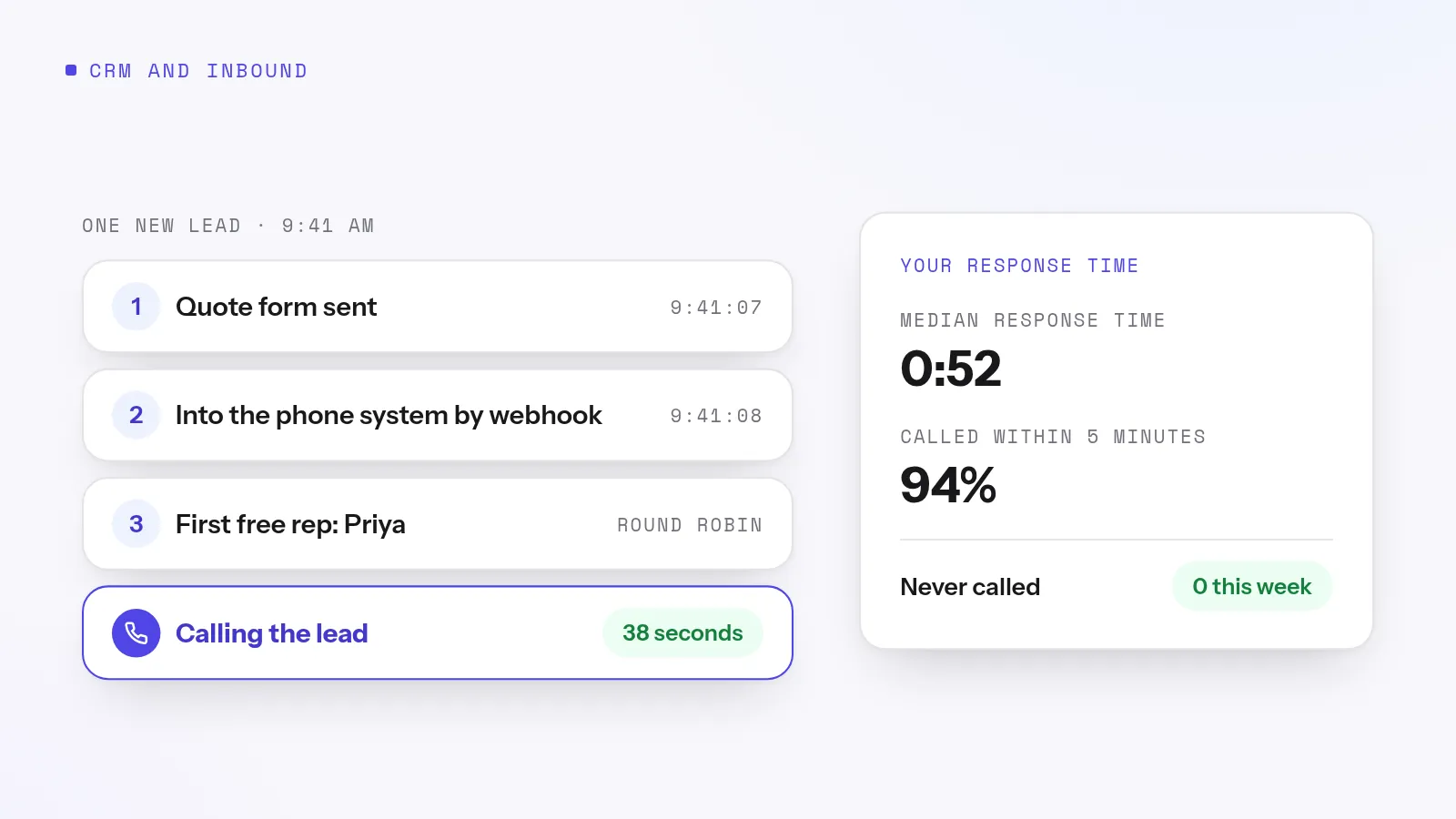
Speed to lead is the time between a lead asking to hear from you and your first call. For shared leads, such as portal inquiries, quote forms and bought leads, the first company to call usually gets the conversation, so aim for under a minute. The fastest way is to send each lead into your phone system the moment it arrives, so the call starts automatically instead of waiting for someone to notice an email.
A homeowner fills in a solar quote form at 7:42 pm. The same form goes to four installers. One calls at 7:43 while the homeowner still has the tab open. Another calls at 9:15 the next morning. Guess which one gets the appointment.
Speed to lead isn't about being pushy. It's about reaching someone while they're still thinking about the thing they asked for. Ten minutes later they're making dinner. The next day they've already talked to someone else. This post is part of our guide to choosing a CRM with a built-in phone system.
Why the first call wins
Many leads are shared. Portals, comparison sites and lead vendors often send the same person to several buyers.
Intent fades fast. Someone who just submitted a form is at their desk, on their phone and expecting a call. An hour later, none of that is guaranteed.
The first conversation sets the frame. The company that explains things first is the one others get compared against.
Measure your own response time first
Before you change anything, find out where you are. For your last 50 leads, note when each one arrived and when the first call was made. Then work out:
Measure
How
What it tells you
Median response time
The middle value of all response times
Your typical speed
Share called within 5 minutes
Leads called in 5 minutes ÷ all leads
How often you're likely to be first
After-hours gap
Response time for leads arriving evenings and weekends
Where you're losing the most
Never called
Leads with no call at all
Leads you paid for and lost outright
Most teams are surprised by the last two lines. Evening and weekend leads often wait until the next working morning, and a few slip through entirely.
Why leads wait
It's rarely laziness. Usually the lead arrives as an email or a notification, someone has to see it, copy the number into a phone and dial. Every step adds minutes, and nobody does it while they're already on a call. The fix is to remove the steps, not to ask people to try harder.
Try it on your own numbers. Send every new lead into a call flow the moment it arrives.
Send leads straight into your phone system. Connect each lead source (web forms, portals, vendors) so a new lead arrives as data, not as an email. Our post on sending web form leads to your CRM walks through it.
Start the call automatically. When a lead arrives, ring a free rep and dial the lead, or ring the rep first and connect them when they answer.
Plan for no answer. If nobody picks up, send a text, ideally from the number you called from, then retry later in the day.
Cover after hours. Decide what happens to a 9 pm lead: an on-call rep, a text saying when you'll call, or the first call of the morning.
Screen before the dial. Speed doesn't excuse calling a number on the Do Not Call list. The check should happen in the same step, not after.
Calling-hour and Do Not Call rules differ by state. This is general information, not legal advice, so check with your own counsel.
What to look for in speed-to-lead software
Feature
Why it matters
A webhook or API per lead source
Leads arrive in seconds, labeled by source
Lead-triggered calls
No human step between the form and the dial
Round robin routing
The first free rep takes it
Text follow-up from a known number
A missed first call still starts a conversation
Compliance screening in the flow
Fast and safe at once
Response-time reporting
You can prove it's working
How it works in Adoptiv
Give each lead source its own inbound webhook address. Adoptiv checks the sender's signature or token, ignores a repeat delivery within 24 hours so a vendor's retry doesn't create a second lead, and hands what arrives to the automation you built, such as creating the lead. If a source should stop sending, generate a new address and the old one stops working.
From there a call flow can screen the number, ring a free rep and dial the lead, then text them from a number you pick on the step if nobody answers. Pick the number you called from, so the text and the missed call come from the same place.
Common questions
What is speed to lead?+
The time between a lead asking to be contacted and your first call or message. The shorter it is, the more likely you are to reach them first.
How fast should you call a new lead?+
For shared leads, within a minute or two if you can. Measure your current median response time and work down from there.
How do you improve lead response time?+
Remove the manual steps: send leads straight into your phone system, start the call automatically, route to whoever is free and follow up by text when nobody answers.
What about leads that arrive after hours?+
Decide in advance: an on-call rep, an instant text saying when you'll call, or a first call at opening. Leaving them until someone checks email is the most common way leads are lost.
Adoptiv is the dialer, the CRM and the AI on one platform, where the busywork logs itself and your reps just talk. Try it free for 14 days, with no credit card.
Questions? Call +1 (844) 955-7733. SIYA answers and puts you through to a person.
Adoptiv Team. “Speed to lead: how to call every new lead within a minute”. Adoptiv Inc, November 9, 2026. Retrieved from https://adoptiv.com/blog/speed-to-lead