Skip to content
Adoptiv

How to reduce after-call work without losing the notes

Adoptiv TeamUpdated 3 min read

Short answer

After-call work is everything a rep does once a call ends: picking an outcome, writing notes, booking the next step and sending a follow-up. You reduce it by taking the routine parts off the rep: notes written from the recording, promised callbacks suggested as tasks, and follow-up drafts the rep only has to check. Don't cut it by rushing reps, or the notes get worse.

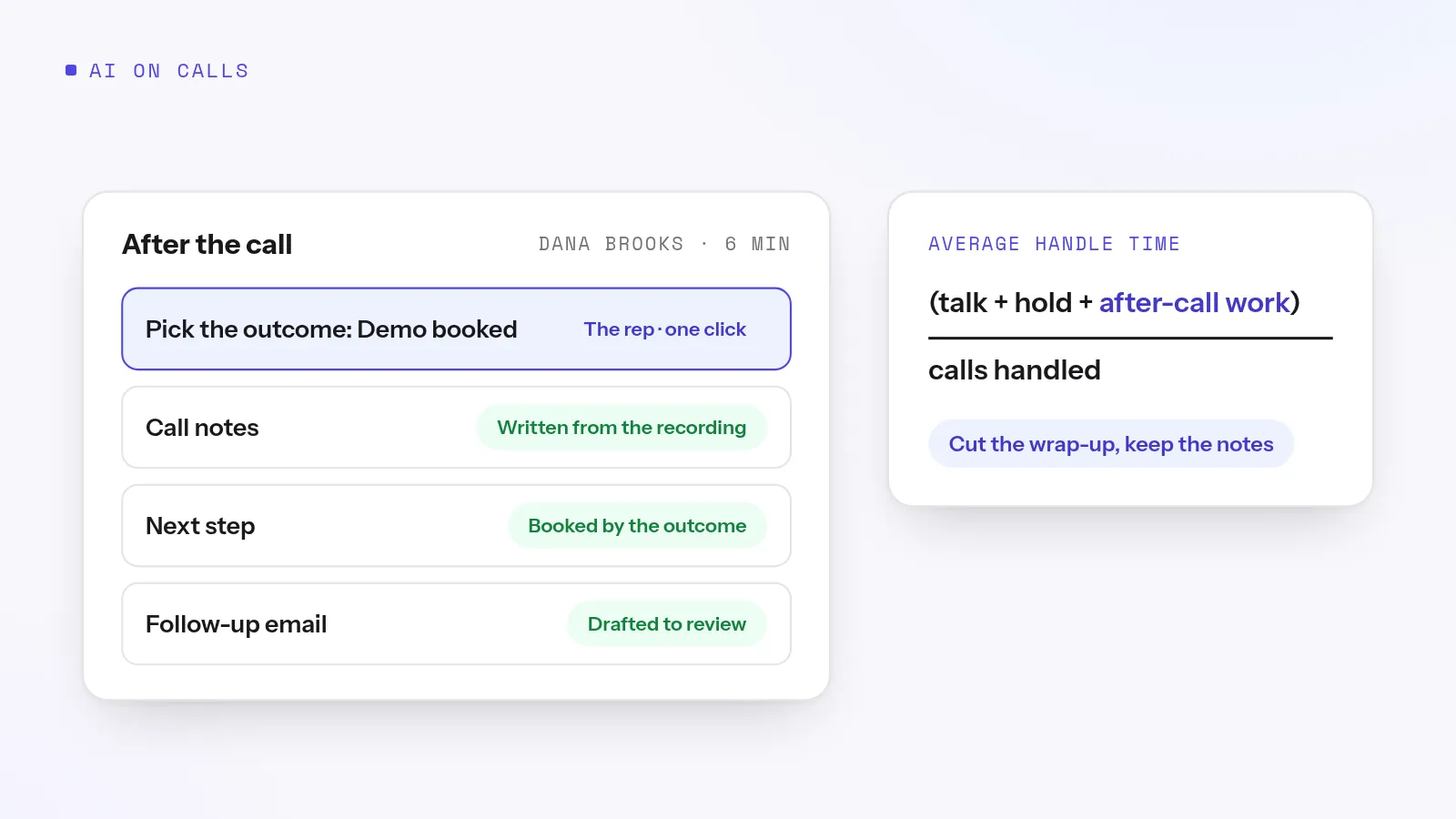
After a call the rep only picks the outcome, while notes, the next step and a follow-up email draft are done for them, beside the average handle time formula.
On this page
  1. Measure it first
  2. Six ways to reduce after-call work
  3. What not to do
  4. How Adoptiv cuts wrap-up time

After-call work, or ACW, is the hidden half of a phone job. Ask a rep how long they spend after each call and they'll guess a few seconds. Time it and it's often a minute or two: finding the record, typing a note, setting a callback, writing the email they promised. Across 60 calls a day, that's an hour or more.

This post is part of our guide to AI for business phone calls.

Measure it first

Measure

How to work it out

Average after-call work

Total wrap-up time ÷ calls handled

Average handle time (AHT)

(Talk time + hold time + after-call work) ÷ calls handled

ACW share of handle time

After-call work ÷ average handle time

Follow-up completion

Promised follow-ups actually done ÷ promised

Watch the last line as closely as the first. Cutting wrap-up time while follow-ups slip is a false saving.

Six ways to reduce after-call work

1. Keep the outcome list short

The rep has to pick how the call went anyway. A short, clear list makes that a second's work, and pairing each outcome with one obvious next step ("Callback requested" means a callback date, "Not interested" means close the lead) stops reps inventing their own. See our call disposition codes post for ready-made sets.

2. Stop typing call notes

A recorded, transcribed call can be summarized automatically: why they called, what was covered and what happens next. The rep reads it and corrects it only if needed. Our post on call transcription vs call summary explains which one your team actually reads.

3. Catch promises on the call

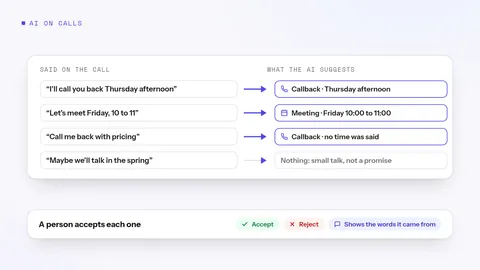
"I'll call you Thursday" is the follow-up most likely to be forgotten. Software that spots callbacks and meetings in the conversation and suggests them as tasks closes that gap.

4. Draft the follow-up email for them

The "as promised, here's the info" email is a big part of wrap-up for many sales teams. A draft the rep only has to check and send takes seconds instead of minutes.

5. Have the record open before the call

A lot of wrap-up is really searching: finding the contact to write on. If the record is already open when the call connects, that time disappears.

6. Fix the fields nobody uses

Every required field a rep fills in after a call should be read by someone. If nobody reports on it, make it optional or remove it.
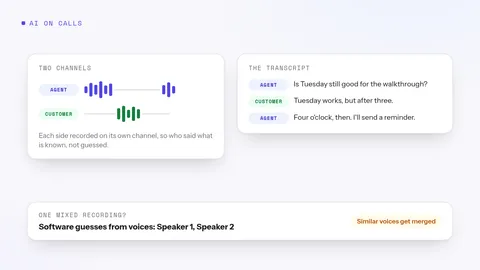
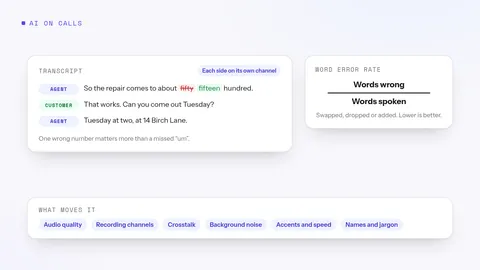
Try it on your own numbers. Calls on each rep's own number written up for them, with promised callbacks suggested as tasks.

Start Free Trial

What not to do

  • Don't set a hard wrap-up timer and stop there. Reps will skip the notes to beat it.
  • Don't merge outcomes until they're meaningless. "Other" saves a click and loses the information.
  • Don't rely on memory for follow-ups. If it isn't a task with a date, it won't happen reliably.

How Adoptiv cuts wrap-up time

On AI+ and Dialer Plus, call summaries write up calls on each rep's own number in one to six plain sentences once the recording is saved: why the customer called, what was covered and what happens next. Very short calls are skipped (under 30 seconds of talk, or 60 seconds on outbound calls), so a quick hang-up doesn't get a write-up. More in our post on AI call summaries.

When a rep promises a callback or books a meeting on the phone, AI action items suggest it with the time that was said. Accept it and a callback becomes a task, while a meeting with a time goes on the calendar, for the rep who took the call. For the follow-up email, AI email writing turns a line about what the email is for into a full draft in the composer. The rep edits and sends it, because nothing goes out by itself.

Common questions

What is after-call work?

The tasks a rep does after a call ends: recording the outcome, writing notes, booking follow-ups and sending anything promised. It's part of average handle time.

What's a good after-call work time?

It depends on the call type. Measure your own average, then cut it by automating routine steps, not by setting a timer.

Does reducing after-call work lower average handle time?

Yes. Average handle time includes talk, hold and after-call work, so faster wrap-up lowers it directly.

Can AI write call notes?

Yes, if calls are recorded and transcribed. AI can summarize each call and suggest follow-ups for a person to accept.

ShareLinkedInXEmail

About Adoptiv

Adoptiv is the dialer, the CRM and the AI on one platform, where the busywork logs itself and your reps just talk. Try it free for 14 days, with no credit card.

Questions? Call +1 (844) 955-7733. SIYA answers and puts you through to a person.

Citing this article

Adoptiv Team. “How to reduce after-call work without losing the notes”. Adoptiv Inc, November 9, 2026. Retrieved from https://adoptiv.com/blog/reduce-after-call-work

Have questions?

or email support@adoptiv.com

Free trial

Try It on Your Own Numbers.

Calls on each rep's own number written up for them, with promised callbacks suggested as tasks.

14-day trial · no card · migration included