Lead stages: 11 examples, and how they differ from deal stages
Adoptiv Team··Updated ·4 min read
Short answer
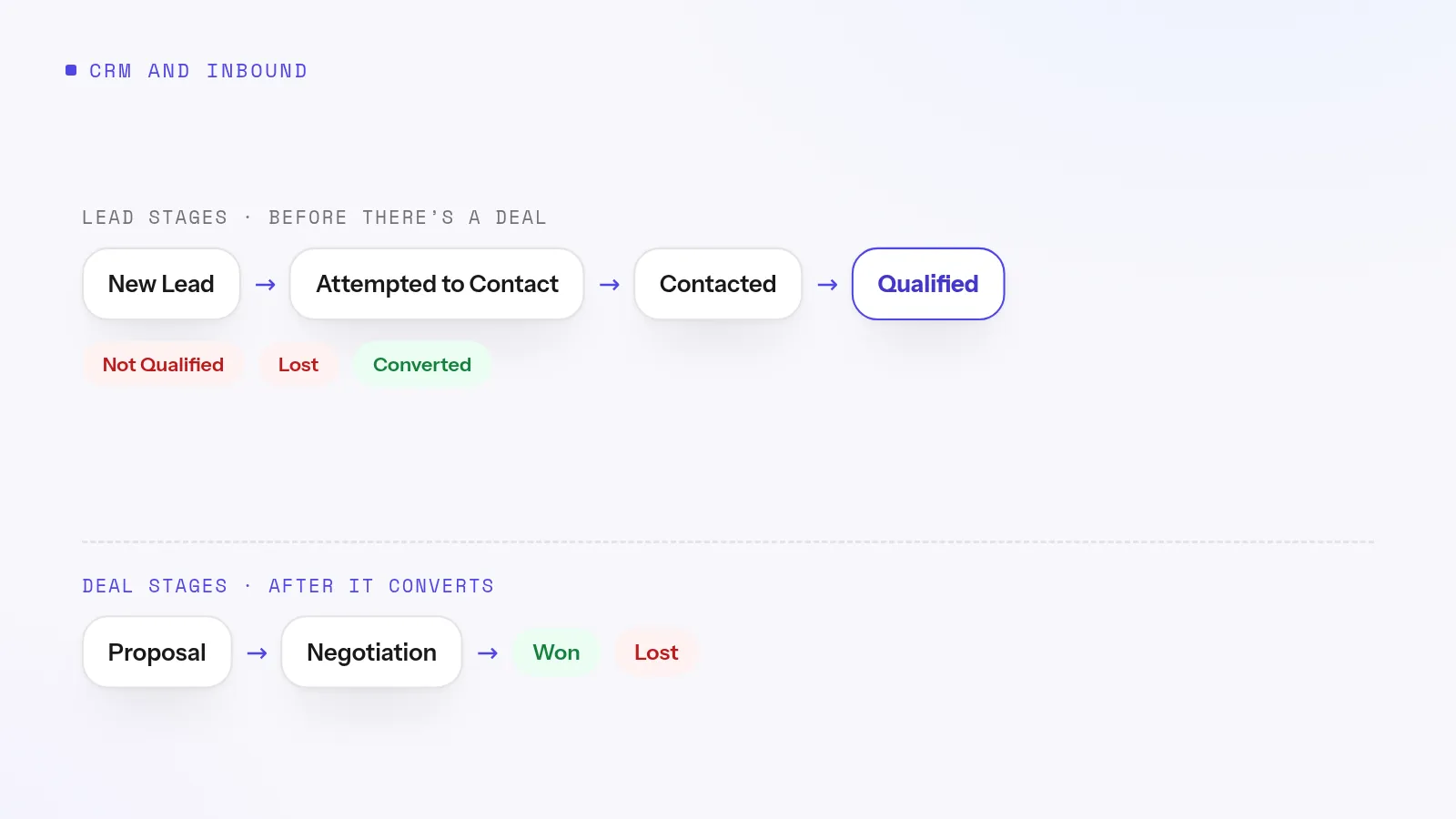
Lead stages are the steps a lead moves through before there's a deal: new, attempted, contacted, qualified, and finally converted or lost. Deal stages track the deal after that. Use one shared list of lead stages that every rep reads the same way, and keep it short enough that nobody has to guess which stage applies.
Ask five reps what "qualified" means and you'll get five answers. That's the problem lead stages solve. When every lead sits on a stage from one agreed list, a manager can see the whole funnel at a glance, reps know what to do next with each lead, and reports compare this quarter with last quarter. When the stage is a free-text column, none of that works.
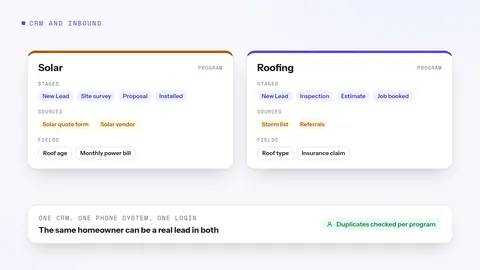
Treat this as a starting point. A solar team might add "Site Survey Booked" between Interested and Proposal Sent, while an insurance team might add "Quote Requested". If you're bringing an old list in, map its status column to these stages first, as covered in our lead import checklist.
Lead stages vs deal stages
Lead stages
Deal stages
Tracks
A person or company you might sell to
A specific opportunity with an amount
Question it answers
"Where is this lead?"
"How likely is this deal to close?"
Typical stages
New, contacted, qualified
Proposal, negotiation, closed won or lost
Measured by
Contact and conversion rates
Win probability and pipeline value
Some teams, especially those selling in one call, never need deals and work only with lead stages. Teams with longer sales cycles convert a lead into a deal once there's a real opportunity, and track it in a pipeline from then on.
Name the stages your team actually uses. Add your own lead stages, put them in order, and roll every one up to six fixed categories so reports still compare.
Enough that every rep knows exactly what each one means, and few enough that they never stop to think about which to pick. For most teams, that's seven to eleven. A good test: if two stages always lead to the same next action, merge them.
Setup mistakes to avoid
Stages that describe activity, not progress. "Left voicemail" is a call outcome, not a stage.
A hand-kept hot/warm/cold field. Reps forget to update it. Let temperature come from what the lead actually does, such as recent replies and calls, or from a lead score, rather than a box someone ticks.
Renaming by hand. If renaming a stage means editing every lead, your system is storing text, not stages.
No written definitions. Write a one-line definition for every stage, and repeat it in onboarding.
No record of where leads came from. Stages tell you how far a lead got; lead source tracking tells you which sources produce the leads that get furthest.
How Adoptiv does it
Adoptiv's lead stages start you with a set of ready-made stages, and you add as many of your own as you need, each with a name, a color, a category and a place in the order. Names are unique, so you can't end up with two Qualified stages. Rename one of your own stages and every lead on it follows; the built-in stages can't be renamed, but you can take any you don't use off the live list, and a stage leaves only once no leads sit on it.
Underneath, every stage rolls up to one of six fixed categories, from new and initial contact through qualification, engagement and sales process to the two outcomes. That keeps reports comparable after the list grows. Stages in Adoptiv don't carry a hot, warm or cold rating. Once there's a deal, it moves through pipelines whose stages each carry a win probability from 0 to 100, with separate won and lost reasons. Filter any lead list by stage and save it as a saved view.
Common questions
What are lead stages?+
The steps a lead moves through before there's a deal, such as New, Contacted, Qualified, and Converted or Lost.
What is the difference between lead status and lead stage?+
Most CRMs use the two terms for the same thing: the step a lead has reached in your process.
Are lead stages the same as pipeline stages?+
No. Lead stages track a lead before there's a deal; pipeline stages track the deal itself, usually with a win probability.
How do I mark leads hot, warm or cold?+
Avoid a field reps have to remember. Base it on what the lead does, such as recent replies, answered calls and meetings, or on a lead score that updates by itself.
Adoptiv is the dialer, the CRM and the AI on one platform, where the busywork logs itself and your reps just talk. Try it free for 14 days, with no credit card.
Questions? Call +1 (844) 955-7733. SIYA answers and puts you through to a person.
Adoptiv Team. “Lead stages: 11 examples, and how they differ from deal stages”. Adoptiv Inc, November 12, 2026. Retrieved from https://adoptiv.com/blog/lead-stages