Generic cold calling advice ("smile and dial", "always be closing") doesn't survive contact with a real floor. An insurance producer calling a shopper who filled in a quote form 40 seconds ago needs a different opener, cadence and tool setup from a solar setter working a list of three-year-old quotes, or a collector who can only call a debtor so many times a week. This guide is the hub of our industry playbooks series: one section per industry, the habits that matter most, and links to the scripts and buying guides behind each one.
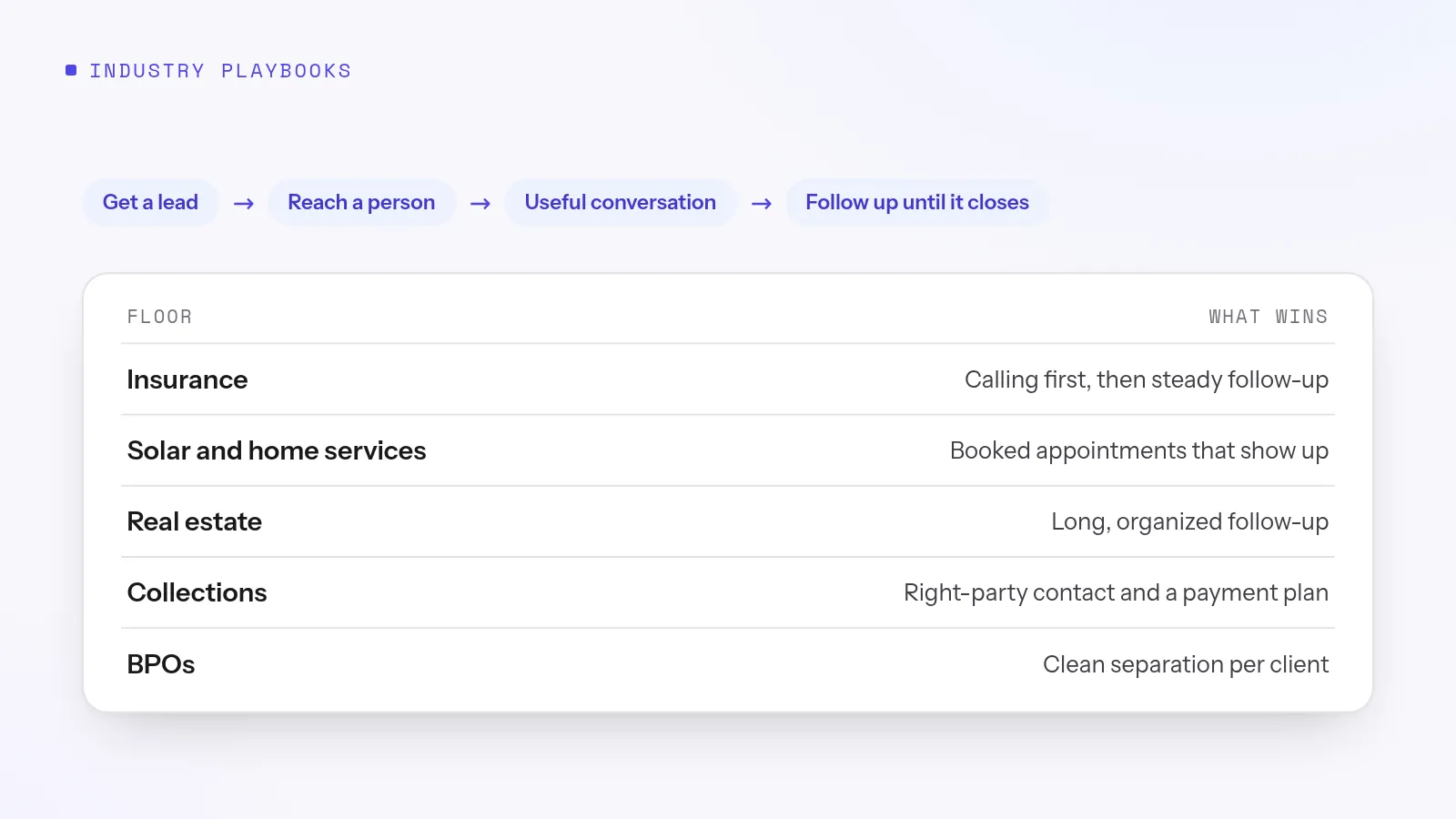
Five floors at a glance
Industry | Typical lead | What wins | Best dialing mode | Watch out for |
|---|---|---|---|---|
Insurance | Fresh quote request, often shared with other agencies; renewals | Calling first, then steady follow-up on quotes | Preview for fresh quotes and renewals, power for aged and purchased leads | Consent on purchased leads, state licensing |
Solar and home services | Web form, aged quotes, neighbors of installs | Booked appointments that show up | Power on aged lists, preview on fresh inquiries | Calling hours, no-shows |
Real estate | Expired listings, FSBOs, absentee owners, inbound sellers | Long, organized follow-up | Power on big lists, preview on hot sellers | Do Not Call on cold lists |
Collections | Placed accounts with known balances | Right-party contact and a payment plan | Preview or power, rarely predictive | Call frequency limits, disclosures |
BPO | Whatever each client sends | Clean separation per client | Depends on each client's campaign | Client data mixing, reporting per client |
If the dialing-mode column is new to you, our outbound dialer guide explains preview, power and predictive dialing and when each fits.
Insurance: speed, follow-up and renewals
A shopper who requests an auto or home quote online is often sent to several agencies at once. The first producer to have a real conversation has the best chance of writing the policy, so the clock starts the second the lead lands. After that, the money is in follow-up: most quotes aren't bound on the first call, and "quoted, not bound" is the biggest pile in most agencies. What to do in the first five minutes after a lead arrives, and the follow-up after that, is laid out in insurance lead follow-up: the first five minutes. Choosing the tool itself is covered in best CRM for insurance agents who call leads.
Life insurance and final expense are slower and more personal. The opener has to earn the right to ask about health, family and budget without sounding like a script, and the appointment matters more than the first call. Our life insurance cold calling scripts and our final expense cold calling script give honest openers, discovery questions and objection handling for each. Annuity conversations are slower again, because the first call is only about earning a meeting; our annuity appointment setting script keeps that call short and honest.
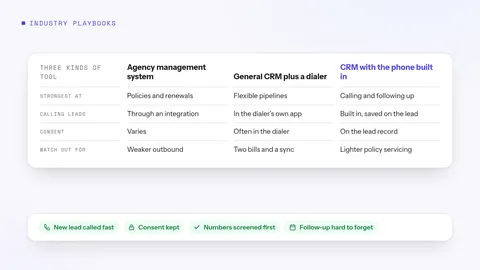
On tools, insurance floors outgrow manual dialing quickly. Look for one-click calling from the lead record, fast follow-up on new leads and a way to work renewals on the day they come due. Our buying guides cover the power dialer for life insurance agents and how to choose an auto dialer for insurance agents across lines. Mortgage protection agents work aged, mailer-driven leads with their own rhythm; the mortgage protection dialer guide covers what they need. Property and casualty agencies take as many service calls as they make sales calls, so the phone system matters as much as the dialer; see phone system for P&C insurance agencies.
- Call new quote leads within minutes, and try again the same day if you miss.
- Track X-dates (when a prospect's current policy expires) and call a few weeks before.
- Check the consent on purchased leads before you dial, and keep the record.
Solar and home services: appointments that show
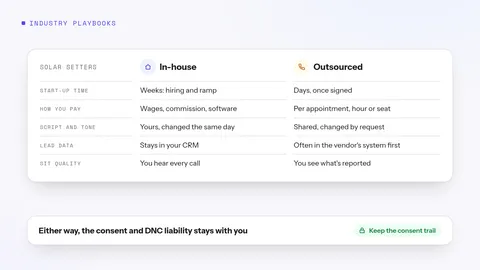
Solar and home-improvement floors are measured on appointments, and an appointment only counts if the homeowner is there when the rep arrives. That changes the script: the setter's job is to confirm the basics (owns the home, roughly what the bill is, who else decides), set a firm time, and confirm it again before the visit. Our solar appointment setting script includes the opener, rebuttals and the confirmation call that keeps show rates up. Deciding who does the setting is its own question, covered in solar appointment setting call center: in-house vs outsourced setters.
Solar lists are often old: quotes from two years ago, homeowners who said "not now", neighbors of a finished install. Each needs its own opener, because "you asked about solar" doesn't work on someone who asked in 2023. The solar cold calling script covers aged leads, old quotes and neighbor installs.
Home services companies (HVAC, roofing, plumbing) run a blend: inbound calls from people with a problem today, and outbound calls for maintenance plans, estimates and storm work. Missed inbound calls are lost jobs, which is why many of these businesses add an AI receptionist for contractors for nights and busy days. For the full tool picture, see home services call center software.
- Confirm every appointment the day before, by call or text.
- Ask who else decides before booking, so both homeowners are there.
- Respect calling hours in the homeowner's time zone, not yours.
Real estate: motivated sellers and long follow-up
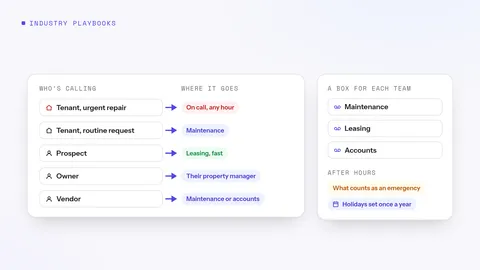
Real estate calling splits into two worlds. Agents call expired listings and FSBOs to win listings; investors call absentee owners, inherited properties and tired landlords to buy at a discount. Both are low answer-rate, high-value work: most calls go nowhere, and one good conversation can be worth a year of commissions. Property managers have the opposite job, with most calls coming in from tenants and owners; phone system for property managers covers that setup.
For agents, the expired listing call is a classic for a reason: the owner wanted to sell and couldn't. The expired listing script covers what to say, the common objections and FSBO calls. For investors, the opener has to be honest about who you are and why you're calling, then get to motivation and timeline quickly; see the real estate investor cold calling script, and for owners who don't live in the property, the absentee owner cold calling script. Inherited properties call for a slower, gentler opener, and the probate leads calling script shows a respectful approach. Many investors hand those first calls to a virtual assistant, and hiring a VA for real estate cold calling covers the setup and the scripts. Teams that buy portal leads face the opposite problem, a warm lead who has already asked about a home, and real estate ISA scripts for portal leads covers that first call and the follow-up.
The tool question for investors is volume plus organization: big lists, several numbers per owner, and follow-up that can run for months. Our guide to the best dialer for real estate investors lists what to look for and what to skip, and wholesalers, who call the biggest lists of all, have their own checklist in best dialer for wholesaling real estate.
- Scrub cold lists against Do Not Call before calling; many owners on purchased lists are registered.
- Log motivation and timeline on every conversation, so the follow-up call starts where the last one ended.
- Plan for six to twelve months of follow-up on a seller who says "maybe next year".
Collections: right-party contact within the rules
Collections is the most regulated floor in this guide. The goal is a conversation with the right person (not a relative or a roommate), a clear statement of who you are and why you're calling, and an agreement the debtor can keep. US rules limit how often you can try to reach someone about a debt, when you can call, and what you can say to anyone other than the debtor. Many agencies treat those limits as a ceiling built into their dialer rather than a number to check after the fact.
That's why collections floors rarely run fully predictive dialing: abandoned calls and frequency caps make aggressive pacing a liability. Our guide to a debt collection dialer covers what small agencies need (attempt tracking, calling-hours checks, recordings, disclosures) and what to skip.
- Count attempts per account, across every number and every rep.
- Verify the right party before discussing the debt.
- Record and review calls for disclosures and stop-contact requests.