Solar appointment setting call center: in-house vs outsourced setters
Adoptiv Team··3 min read
Short answer
Outsourcing solar appointment setting gets you calling fast with no hiring, but you give up control over script, lead handling and compliance, and you pay per appointment whether it sits or not. An in-house setter team costs more to start and takes weeks to ramp, but you own the quality, the data and the consent trail. Many installers start outsourced and bring setting in-house once they know what a good sit looks like.
Solar sales usually splits into two jobs: setters who call leads and book a site visit or virtual consultation, and closers who run the appointment. Who does the setting is one of the biggest decisions a solar company makes about its sales floor. This post is part of our industry calling playbooks; for what setters actually say on the phone, see our solar appointment setting script.
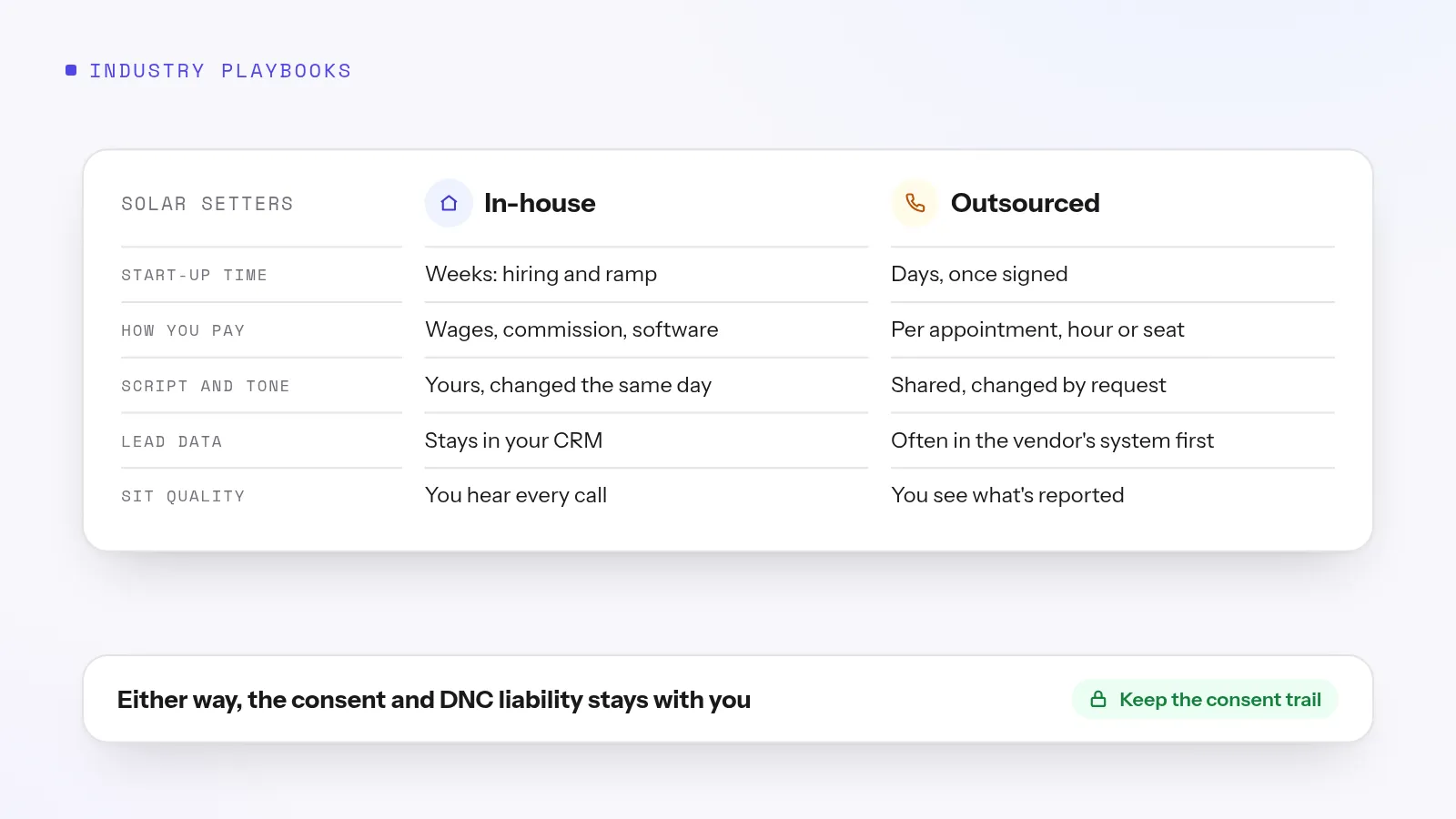
The two models side by side
In-house setters
Outsourced call center
Start-up time
Weeks: hiring, training, ramp
Days, once the contract is signed
How you pay
Wages, commission, software, management time
Per appointment, per hour or per seat
Script and tone
Yours, changed the same day
Shared with other clients, changed by request
Lead data
Stays in your CRM
Often lives in the vendor's system first
Consent and DNC
Your process, your records
Your liability, their process
Sit quality
You see every call
You see what's reported
When outsourcing makes sense
Outsourcing works when you need volume quickly, you're testing a new territory, or you don't yet have a sales manager who can run a floor. Ask any vendor four things before signing: how they define a qualified appointment (homeowner, credit, roof, bill), whether you can listen to recordings of calls made for you, where the lead records live, and how they screen numbers and keep consent records. Pay attention to the definition. An appointment that doesn't sit still costs your closer a drive.
Try it on your own numbers. Hand setter calls to closers live, keep each lead's consent record on file, and confirm sits by text.
Bring setting in-house when your cost per sat appointment from a vendor is higher than you could run it yourself, when closers keep complaining about appointment quality, or when you want the setter and the closer to work as one team. In-house setters can hand a hot homeowner straight to a closer while they're still on the phone, which is hard to do across two companies. Our guide to home services call center software covers the tools that floor needs.
Compliance doesn't move with the work
Whoever dials, the calls are made to sell your solar. Bought leads need a clear record of how consent was given, numbers need screening against the federal Do Not Call list and your own list, and anyone who asks not to be called again has to be honored. Agree in writing who keeps those records and how you'll see them. This is general information, not legal advice, so check with your own counsel.
Running an in-house setting floor on Adoptiv
Adoptiv is built with solar and home services floors in mind. A vendor's lead can come in with its TrustedForm or Jornaya LeadiD, which stays on the lead as consent evidence; whether it's enough is for your counsel. Numbers are screened against the federal Do Not Call list, known litigators and your own list through compliance screening, and marking a lead Do not call stops it on every number the person has.
When a homeowner is ready, warm transfer puts the setter and the closer together privately while the homeowner holds, then joins all three. Confirmation texts go out from the same business numbers, the reply lands on the same record, and Adoptiv handles 10DLC registration.
Common questions
How much do outsourced solar appointment setters cost?+
Vendors charge per appointment, per hour or per seat, and prices vary widely by lead source and region. Compare on cost per sat appointment, not cost per booked one.
What counts as a qualified solar appointment?+
Agree it in writing: usually the homeowner on the call, a minimum monthly bill, a suitable roof, and both decision-makers at the appointment.
Who is responsible for compliance if I outsource?+
You still are, because the calls sell your product. Get the vendor's screening and consent process in writing. This is general information, not legal advice, so check with your own counsel.
Can setters transfer straight to a closer?+
Yes, if they share a phone system. In Adoptiv, a warm transfer lets the setter brief the closer privately before the homeowner joins.
Adoptiv is the dialer, the CRM and the AI on one platform, where the busywork logs itself and your reps just talk. Try it free for 14 days, with no credit card.
Questions? Call +1 (844) 955-7733. SIYA answers and puts you through to a person.