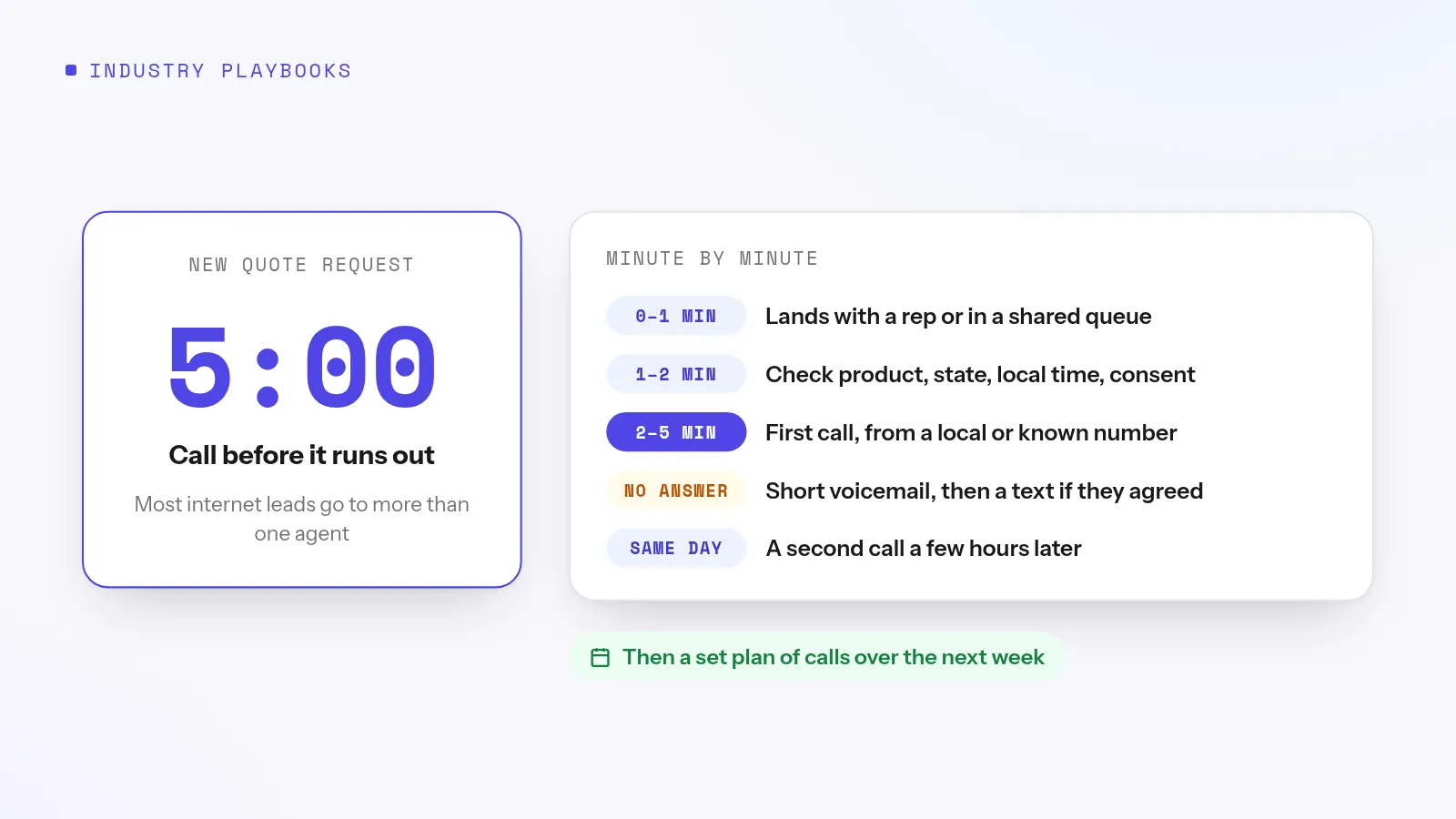
Call a fresh insurance lead within five minutes, while they're still on the quote page and before another agent reaches them. If they don't answer, leave a short voicemail, send a text if you have permission to, and follow a set plan of calls over the next week. Most sold internet leads go to more than one agent, so speed and persistence decide who writes the policy.
An internet lead is a person who asked for a quote a few minutes ago. Five minutes later they're comparing; an hour later they've talked to someone else. This post is part of our outbound calling playbooks by industry.
Minute by minute
When
What to do
Why
0–1 min
Lead lands with a rep or in a shared queue
A lead nobody owns is a lead nobody calls
1–2 min
Glance at the form: product, state, local time, consent
Know who you're calling and whether you may
2–5 min
First call, from a local or known number
They're still at the screen and expecting contact
No answer
Short voicemail, then a text if they agreed to texts
Gives them a way back on their terms
Same day
A second call a few hours later
Many people answer on the second try
The research behind the five-minute rule, and why it applies well beyond insurance, is in speed to lead.
What to say on the first call
Keep it about their request, not your pitch. Say who you are, where their request came from and what you need from them: "Hi Dana, this is Sam with Northside Insurance. You asked for a term life quote a few minutes ago. I've got a couple of quick questions so I can get you real numbers." Confirm the details on the form, ask the one or two questions that change the price, and set the next step before you hang up. For full openers and objection handling, see our life insurance call script.
Try it on your own numbers. New leads are screened as they arrive and can land in a queue your team claims from, with every call on the lead.
Day 1: call within five minutes, voicemail, text if permitted, second call later the same day.
Day 2: one call at a different time of day.
Day 3–4: one call and one email with the quote basics.
Day 7: a last call and a short "should I close your file?" message.
Stop when they ask you to, and record it so nobody else on the team calls them again. Agents who work leads in volume often pair this plan with a dialer; see power dialers for life insurance.
Rules that protect you
Check consent before you call or text. A purchased lead's consent should name you or your agency. Keep the record of it.
Respect calling hours. Call within the lead's local time window, not yours, and follow any stricter state rules.
Screen against Do Not Call lists. Even when someone filled in a form, check their number before dialing, and honor any opt-out right away.
This is general information, not legal advice, so check with your own counsel.
Insurance lead follow-up in Adoptiv
In Adoptiv a new lead goes to a rep, a role or a team. Team and role leads wait in a queue until one agent claims them, and once someone holds a lead nobody else can take it. New and imported leads are queued for federal Do Not Call and litigator screening, and the answer is saved on the lead. For the days after the first call, a sequence can mix emails, texts, waits and call tasks on one plan.
Common questions
How fast should you call an insurance lead?+
Within five minutes of the lead arriving. Contact rates fall quickly after that, and shared leads go to whoever calls first.
How many times should you call a lead?+
Six to eight attempts over about a week is common, spread across days and times, unless they ask you to stop.
Should I text insurance leads?+
Only if they agreed to texts. A short text after a missed call often gets a reply when calls don't.
What if the lead says they already got a quote?+
Ask what they were quoted and what mattered most. Many people take a second quote if you can explain the difference clearly.
Adoptiv is the dialer, the CRM and the AI on one platform, where the busywork logs itself and your reps just talk. Try it free for 14 days, with no credit card.
Questions? Call +1 (844) 955-7733. SIYA answers and puts you through to a person.