What is STIR/SHAKEN attestation? A, B and C explained
Adoptiv Team··3 min read
Short answer
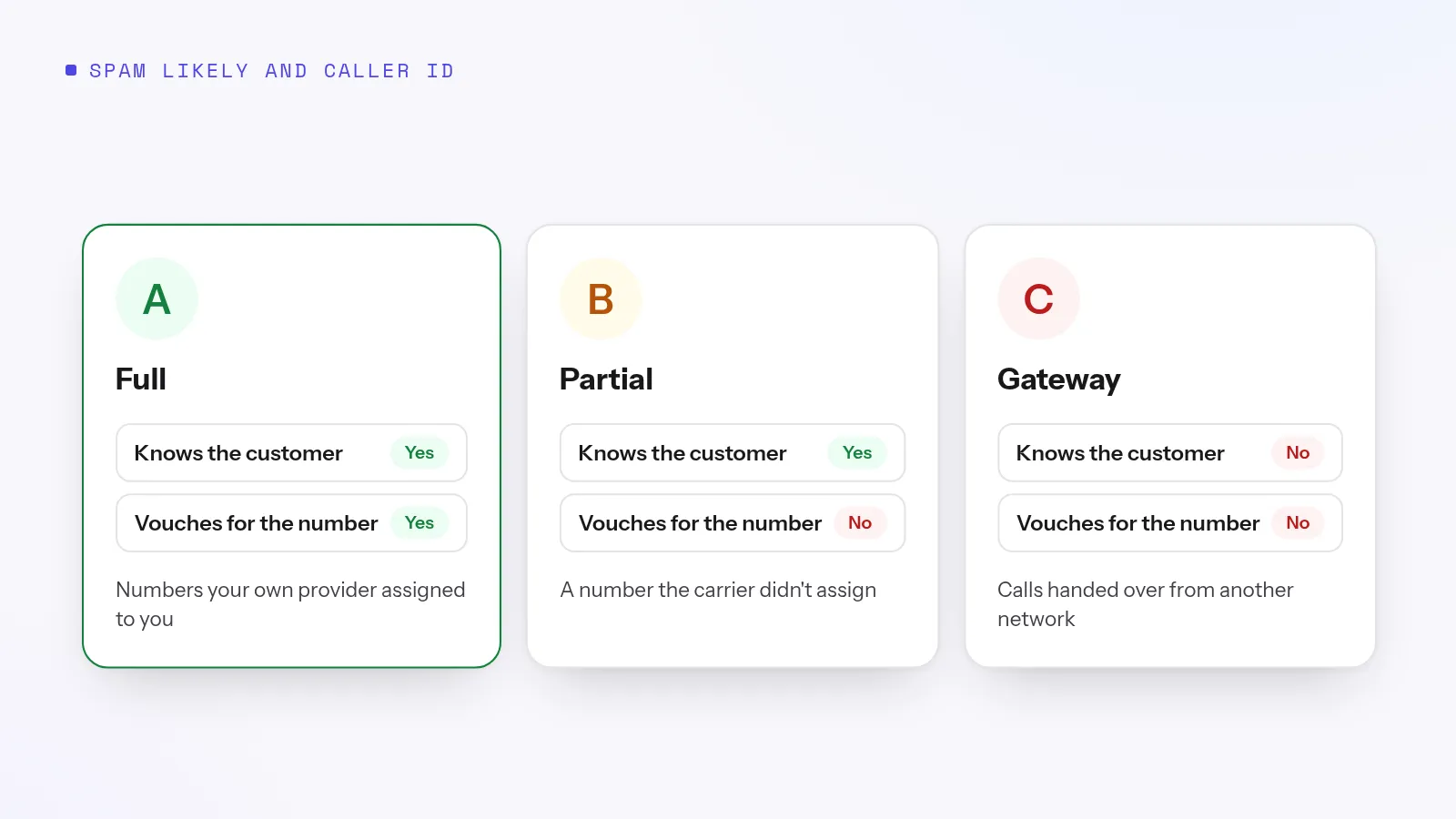
STIR/SHAKEN attestation is a grade the originating carrier stamps on every call it signs, saying how sure it is that the caller may use the number shown. A (full) means the carrier knows the customer and knows they're allowed to use that number. B (partial) means it knows the customer but can't vouch for the number. C (gateway) means the call came in from somewhere else and the carrier can't vouch for either. Attestation proves the caller ID isn't spoofed. It doesn't decide whether a call gets labeled spam.
If your answer rates have dropped, someone has probably told you to "check your attestation." Here is what that grade actually is, who sets it, and how much it matters. This post is part of our business caller ID guide.
What STIR/SHAKEN is
STIR/SHAKEN is the framework US carriers use to sign calls so the receiving network can check that the caller ID wasn't faked. The carrier that starts the call adds a signed token to it. The carrier that delivers it checks the signature against a certificate and passes the result along. The TRACED Act made it mandatory, and the FCC requires voice providers on IP networks to sign and verify calls.
The signature carries one letter, the attestation level. That letter is the carrier's statement about the caller, not about the call's content.
A, B and C side by side
Level
The carrier knows the customer
The carrier knows they may use the number
Typical case
A, full
Yes
Yes
A business calling from numbers its own provider assigned to it
B, partial
Yes
No
A customer sending calls with a number the carrier didn't assign, such as one from another provider
C, gateway
No
No
Calls handed over from another network, such as international traffic entering the US
Who decides your level
You don't, and the person you're calling doesn't. The originating provider, the company whose network your call starts on, assigns it based on what it knows about you and your numbers. That's why the simplest route to A attestation is calling from numbers your voice provider issued to you, or numbers it has confirmed you have the right to use. Numbers borrowed from elsewhere, or calls routed through several resellers, are where B and C usually come from.
Try it on your own numbers. Call from your own US business numbers, ranked for every lead.
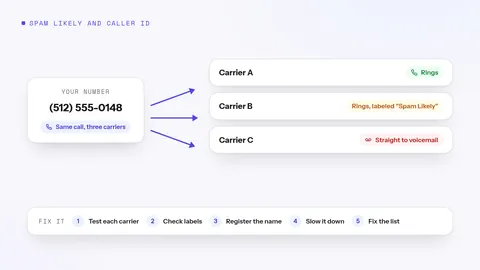
Not by itself. Spam labels come from analytics engines run by the carriers and their partners, and they judge how a number behaves: how many calls it makes, how many are answered, how many are short, and how many people complain. A fully attested number that dials thousands of people who hang up in three seconds can still be labeled. A is necessary for a good reputation. It is not sufficient.
Ask your voice provider. It knows what it signs your calls with, number by number.
Test a call to a phone you control. Some carriers and handsets show a verified checkmark for A-attested calls, though not all display anything.
Watch for B or C on numbers you ported in or bought elsewhere. Those are the ones worth asking about first.
Where Adoptiv fits
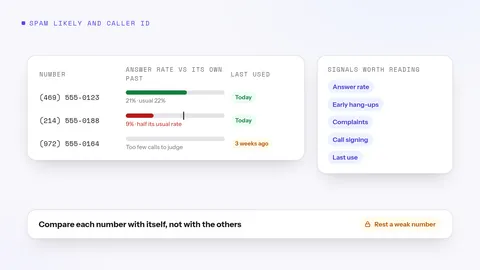
Adoptiv sells US business phone numbers, so your calling numbers and your phone system come from the same place. When a rep calls a lead, smart caller ID ranks the numbers that rep may use for that person, giving weight to numbers the person has answered before and to a matching area code, and pre-selects the top one. The rep can pick another. That keeps you calling from numbers people recognize, which is the part of reputation you control.
This is general information, not legal advice, so check with your own counsel.
Common questions
What does A attestation mean?+
Full attestation: the carrier that started the call knows who you are and knows you're allowed to use the number shown.
Is B attestation bad?+
Not illegal, but it tells the receiving network that the carrier can't vouch for your number. If you can, call from numbers your provider assigned or verified, so they can be signed A.
Can I choose my attestation level?+
No. Your originating provider assigns it based on what it knows about you and the number.
Will A attestation stop my calls being labeled spam?+
No. It proves the number isn't spoofed. Spam labels depend on how the number is used, such as call volume, short calls and complaints.
Adoptiv is the dialer, the CRM and the AI on one platform, where the busywork logs itself and your reps just talk. Try it free for 14 days, with no credit card.
Questions? Call +1 (844) 955-7733. SIYA answers and puts you through to a person.