Business phone number marked as spam? 8 causes and how to fix each
Adoptiv Team··Updated ·4 min read
Short answer
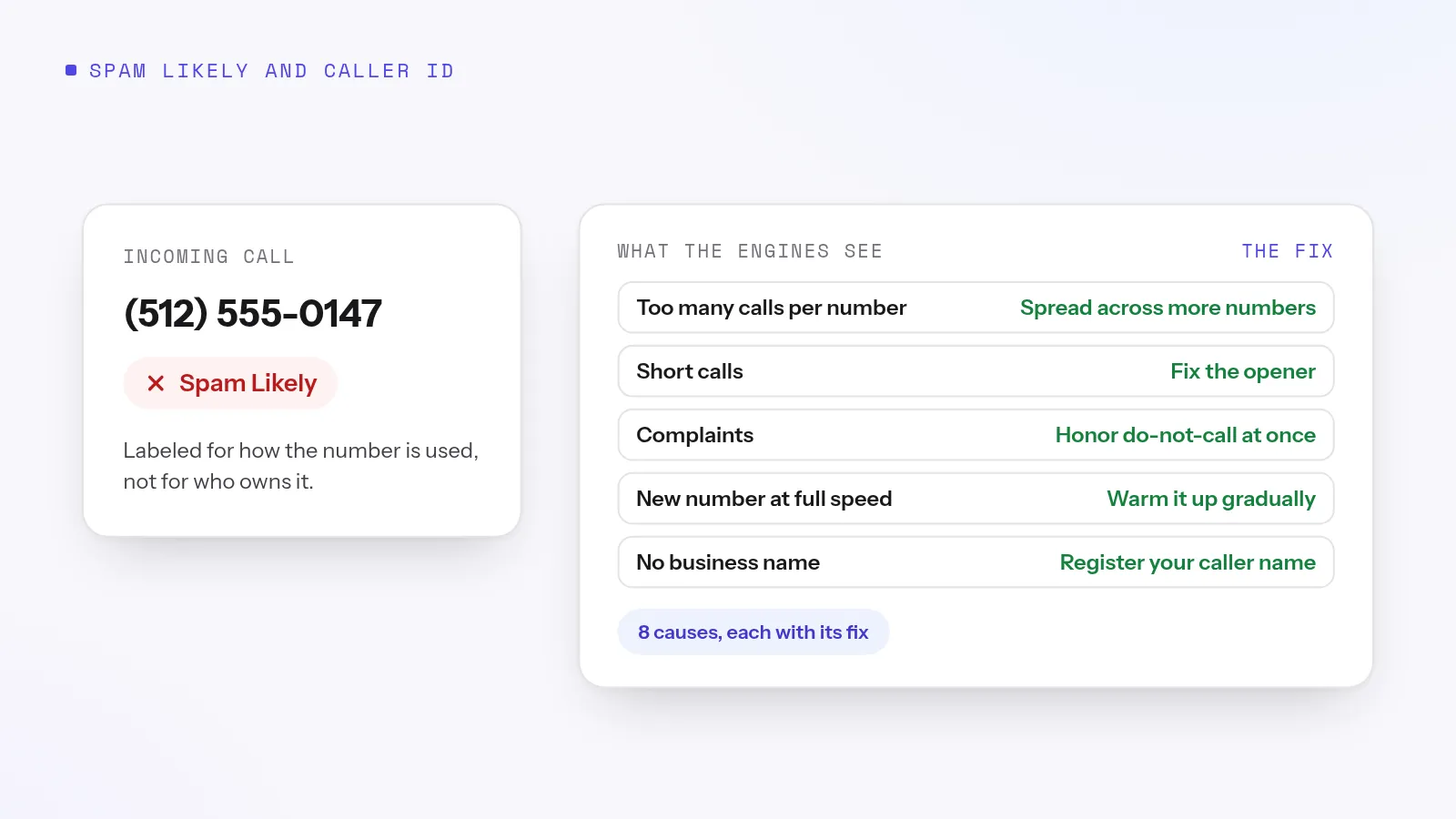
Business numbers get marked as spam because of how they are used, not because of who owns them. Carrier analytics engines watch for patterns: lots of calls from one number, many short or unanswered calls, complaints, and brand-new numbers dialing at full speed. The fix is to change the pattern that triggered the label, register your business name, and spread calls across more numbers.
A "Spam Likely" or "Potential Spam" label usually arrives without warning. Answer rates drop, and someone eventually mentions what their phone showed. Before asking for a review, find out what caused the label, or it will come back. Here are the eight usual causes.
Part of our business caller ID guide, which covers numbers, reputation and "Spam Likely" from start to finish.
The 8 causes at a glance
Cause
What the analytics engines see
The fix
1. Too many calls per number
One number dialing hundreds of people a day
Spread calls across more numbers
2. Short calls
People hang up within seconds
Fix the opener and the delay before a rep speaks
3. Low answer rate
Most calls ring out
Call better lists at better times
4. Complaints
Reports filed against the number
Honor do-not-call requests at once
5. A new number at full speed
No history, then sudden volume
Warm new numbers up gradually
6. No business name
An unknown caller with no CNAM
Register your caller name
7. Not registered
No record of who owns the number
Register with the Free Caller Registry
8. Unfamiliar area codes
Calls people don't recognize, so they decline them
Call from numbers local to your contacts
1–3. Volume, short calls and unanswered calls
These three usually come together. A rep or a dialer works a long list from one number, most calls ring out, and the ones that connect end quickly. To an analytics engine, that is what robocalling looks like, even when every call is legitimate. Slow the number down, add numbers so each carries less, and look at the first five seconds of your calls. A silent pause before a rep says hello is a common reason people hang up.
4. Complaints
People can report a number to their carrier, to call-blocking apps and to regulators. A few reports can matter more than thousands of quiet calls. Stop calling anyone who asks you to, keep an internal do-not-call list, and check your lists before every campaign. This is general information, not legal advice, so check with your own counsel.
See it run on a real floor. See which of your numbers look flagged before your customers do.
5. A new number dialing at full speed
A fresh number has no reputation to protect it. Put it in front of a full list on day one and it can be flagged within days. Start new numbers on a small share of calls and build up over a week or so.
6–7. No name, no registration
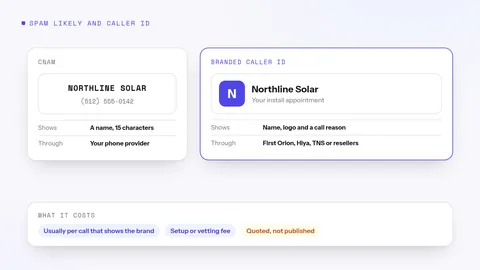
A call that shows only a number, from a company the carriers have no record of, gets less benefit of the doubt. Register your caller name (CNAM) so your business name can show, and register your numbers with the Free Caller Registry, which passes them to the major analytics engines. Neither guarantees a clean label, but both remove a reason to suspect you.
8. Area codes people don't recognize
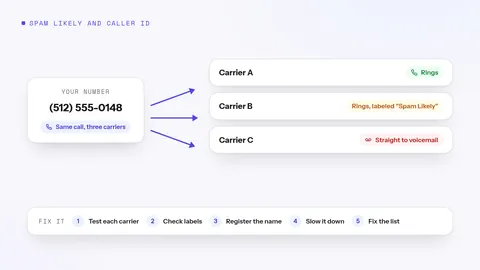
People decline calls from area codes they don't recognize, and every declined call drags down a number's answer rate. Calling from numbers local to your contacts helps, but rotating through numbers just to look local can backfire. Our guide to removing Spam Likely covers what to avoid, and checking a number shows how to see what each carrier displays.
How Adoptiv helps
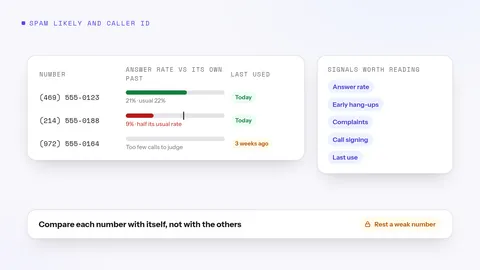
Adoptiv's caller ID pools come with its campaigns, which are in early access. Where they're switched on, the caller ID reputation check gives each pool number that's dialing a 0 to 100 health score each day, from its answer rate, early hang-ups and the complaints filed against it. A number is flagged when it collects two complaints in 30 days, and, once it has enough calls to judge, when its answer rate falls to half of what it was or when 40% or more of its answered calls end within six seconds. A flagged number rests for seven days, a clean spare takes its calls if the pool has one, and a number flagged a third time is released and replaced. The person who set up the pool gets a notification when numbers are rested or swapped. You set your caller name on the pool's page, Adoptiv files it, and each number's Free Caller Registry status shows there.
Adoptiv doesn't read the carriers' own labels. It catches the patterns behind them. No one can guarantee that a label comes off, because the carriers decide.
When a rep places a call by hand, smart caller ID suggests which of your numbers to call from and gives extra points to one whose prefix matches the contact's. You can add local numbers by area code from the phone numbers panel, and Dialer Plus includes 25 caller IDs per rep.
Common questions
Why is my brand-new business number already marked as spam?+
Either it was used heavily before you got it, or it went straight onto a full calling list with no history. Warm new numbers up gradually.
Does STIR/SHAKEN stop my number being marked as spam?+
Not by itself. STIR/SHAKEN confirms a call really comes from the number shown. Spam labels are a separate judgment about how the number is used.
How many calls a day can one number make?+
No carrier publishes a limit. Labels follow patterns, so watch each number's answer rate and early hang-ups rather than aiming at a fixed number.
Will getting a new number fix it?+
Only for a while if nothing else changes. The same calling pattern will get the new number flagged too.
Adoptiv is the dialer, the CRM and the AI on one platform, where the busywork logs itself and your reps just talk. Try it free for 14 days, with no credit card.
Questions? Call +1 (844) 955-7733. SIYA answers and puts you through to a person.