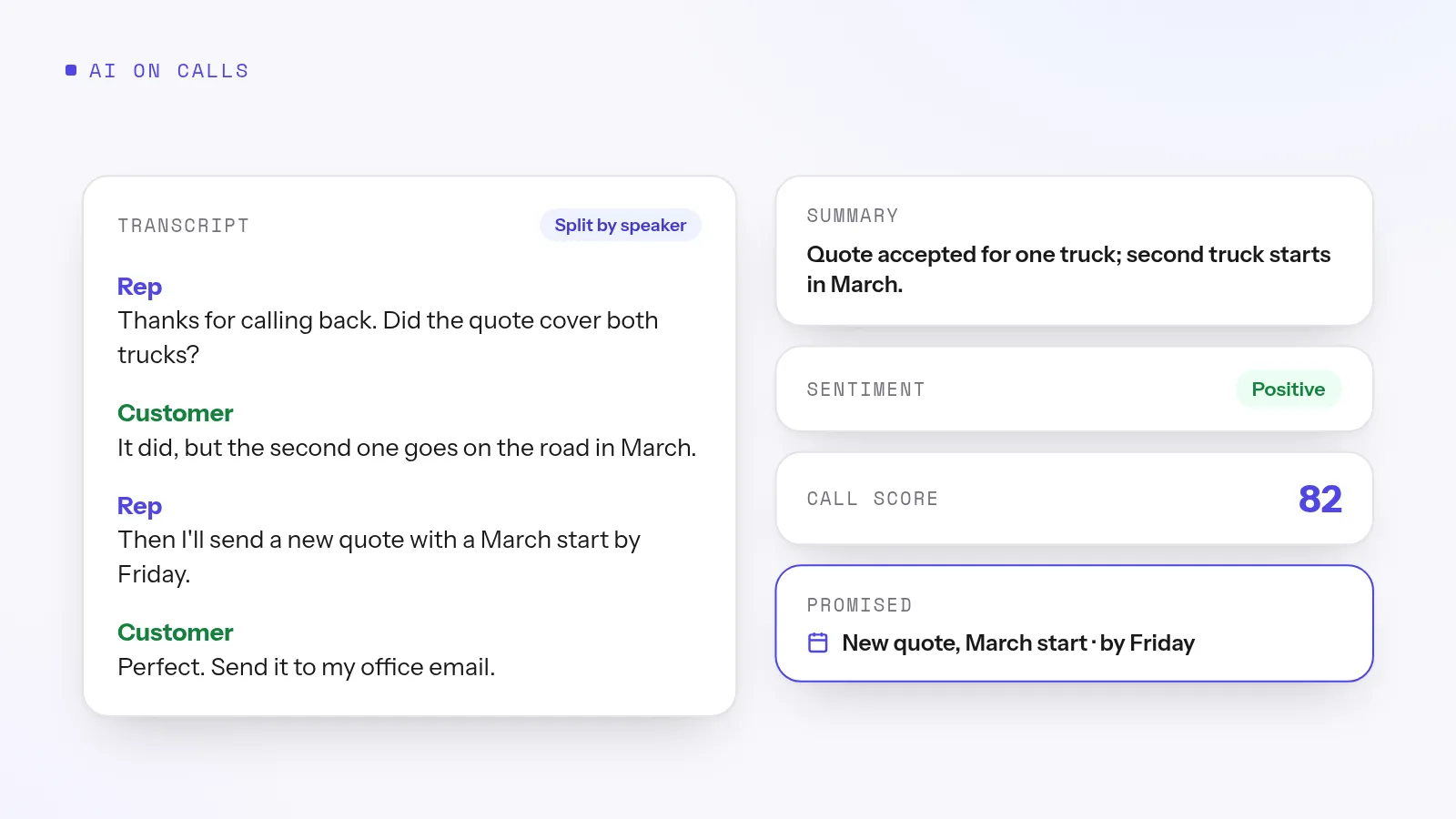
Conversation intelligence is software that records sales calls, transcribes them and tells you what happened in each one: a summary, how the customer felt, what was promised and how well the call was handled. Large teams buy it to coach dozens of reps. A small team gets the most from three parts: summaries that replace notes, scores that point to the calls worth a listen, and follow-ups pulled out of the conversation so nothing promised is forgotten.
The enterprise tools in this category were built for sales orgs with a full-time enablement team. A five-person team doesn't need dashboards of talk tracks. It needs to know what was said on yesterday's calls without replaying them. This post is part of our guide to AI for business phone calls.
What conversation intelligence actually does
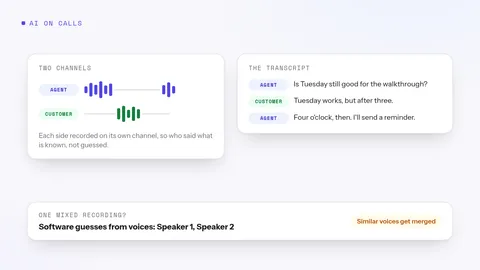
Every tool works the same way underneath. A call is recorded, the recording is turned into a transcript, ideally with the rep and the customer on separate lines, and a model reads the transcript and writes up what it found. The differences are in what it writes up and where the answers land.
Part
What it gives you
Worth it for a small team?
Transcript split by speaker
Every word, rep and customer apart
Yes, as the source for everything else
Call summary
A few sentences on why, what and what's next
Yes, it replaces the notes reps skip
Sentiment and tone
How the customer felt and how the call came across
Useful as a flag, not a verdict
Call scores
A number for how well the call was handled
Yes, to choose which calls to review
Promises and follow-ups
What the rep agreed to do, and when
Yes, this is where deals leak
Deal and pipeline forecasting
Risk signals across many deals
Rarely; you already know your deals
The three parts a small team will use
Summaries. The fastest win. When the next person to call a lead can read three sentences instead of playing eight minutes of audio, everyone's prep time drops. We cover what a good one includes in AI call summaries for sales calls.
Scores that choose your listening. A manager on a small team can't review every call. A score per call, and a big gap between the overall and the parts, tells them which three calls to open this week. Read the transcript first, then listen to the part that matters.
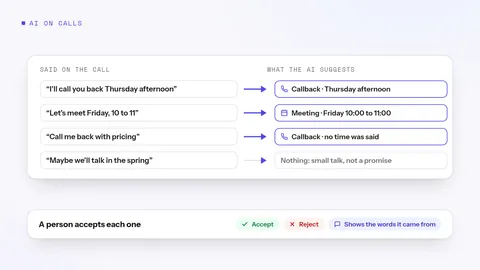
Follow-ups. "I'll send that over Thursday" is the sentence that loses deals. A tool that pulls promised callbacks and meetings out of the call and puts them in front of the rep closes that gap.
Sentiment is the fourth candidate. It's good for spotting a call that went badly, as we explain in call sentiment analysis, but treat it as a reason to look, not a grade.
Read your calls instead of replaying them. Recorded calls on your own number get a summary, sentiment and five scores.
Check recording consent first. Some states need every party to agree to a recording. Tell callers the call is recorded. This is general information, not legal advice, so check with your own counsel.
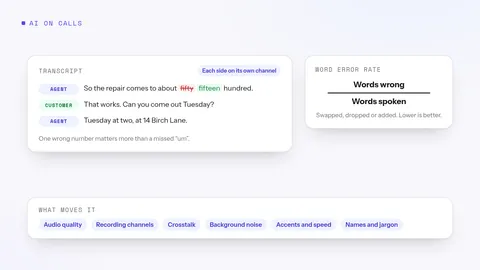
Run it on two weeks of calls before you trust it. Read ten summaries against the recordings and count what's wrong.
Pick one use per role. Reps read summaries; managers review the lowest-scoring calls once a week.
Don't grade reps on the score alone. A score is a starting point for a conversation, not a performance review.
Conversation intelligence in Adoptiv
Adoptiv records calls in its own phone system, so there's no meeting bot and no second tool. After a recorded call ends, it's transcribed with each side on its own line, and SIYA reads it once. That one AI call analysis returns a summary of one to six sentences, the customer's sentiment, the tone of the conversation, what the customer asked for and what the rep promised, and five scores from 0 to 10: communication, issue resolution, customer satisfaction, compliance, and an overall judged on its own. You can add your own context about your business and scripts, and SIYA reads it as background to every analyzed call.
Callbacks, meetings and contact changes SIYA hears go to My Feed as suggestions, and a person accepts or rejects each one. Analysis is included on AI+, Dialer Plus and Enterprise for calls on your own number. Very short calls are skipped: under 30 seconds of talk, or 60 seconds on an outbound call.
Common questions
Is conversation intelligence only for big sales teams?+
No. Small teams use fewer parts of it: summaries, scores to pick which calls to review, and follow-ups pulled from the call.
What's the difference between conversation intelligence and call recording?+
Recording keeps the audio. Conversation intelligence reads it and tells you what happened, so you don't have to replay it.
Can AI scores replace call reviews?+
No. Scores help you choose which calls to review. A person still listens before giving feedback.
Do customers need to know calls are analyzed?+
They need to know calls are recorded where the law requires consent. Many teams also say recordings are used for quality and training.
Adoptiv is the dialer, the CRM and the AI on one platform, where the busywork logs itself and your reps just talk. Try it free for 14 days, with no credit card.
Questions? Call +1 (844) 955-7733. SIYA answers and puts you through to a person.