Why your answer rate dropped, and how to tell if it's your numbers
Adoptiv Team··Updated ·3 min read
Short answer
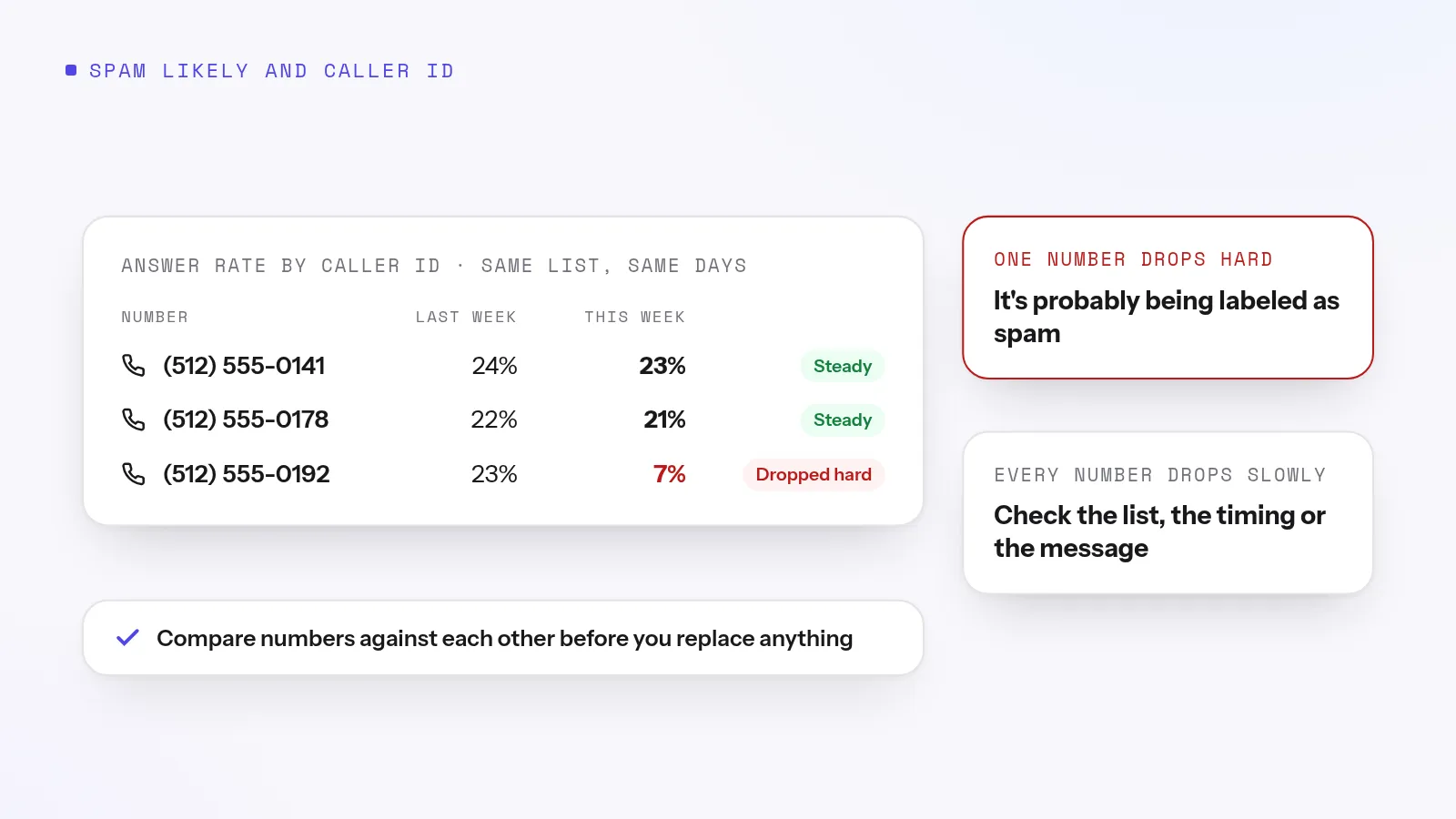
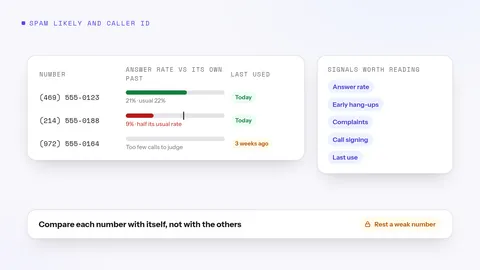
A sudden, steep drop in answer rate on one or two numbers, while other numbers calling the same list hold steady, usually means those numbers are being labeled as spam. A slow drop across every number usually means the list, the timing or the message changed. Compare numbers against each other on the same list before you replace anything.
When fewer people pick up, the first instinct is to blame a "Spam Likely" label and buy new numbers. Sometimes that's right. Often it isn't, and new numbers on a tired list just get labeled faster. This guide is part of our business caller ID guide.
First, check the five usual suspects
Cause
What it looks like
How to check
Number labeled as spam
One number drops hard; others on the same list don't
Compare answer rate by caller ID on the same list and days
Tired or bad list
Every number drops slowly; more wrong numbers
Compare the same numbers on a fresh list
Timing
The drop lines up with new calling hours
Compare by hour of day in the lead's time zone
Too many calls per number
Drop starts after volume went up
Look at daily dials per number before and after
Area code mismatch
Lower answers outside one region
Compare local and out-of-area calls
Signs it really is your numbers
The drop is sharp. A label tends to appear on a number from one day to the next, so the answer rate falls off a step rather than sliding.
People hang up within seconds. When many answered calls end in the first few seconds, the person saw a warning, answered by accident or heard nothing they expected.
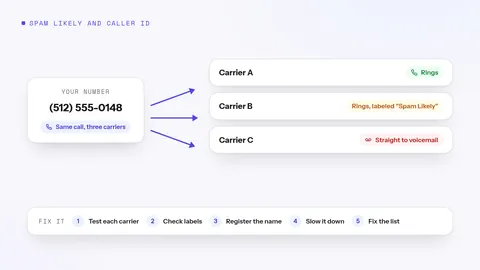
One carrier, not all of them. If answers fall mostly on one network, that carrier's analytics likely labeled the number.
Complaints come in. Even a couple of complaints in a month can push a number over a carrier's line.
Do Not Call rules and calling-hours rules vary by state. This is general information, not legal advice, so check with your own counsel.
How Adoptiv helps
Adoptiv's caller ID pools come with its campaigns, which are in early access. Where they're switched on, caller ID reputation gives each pool number that's dialing a 0 to 100 health score each day, from signals that include its answer rate, early hang-ups and the complaints filed against it. A number is flagged when it collects two complaints in 30 days, and, once it has enough calls to judge, when its answer rate falls to half of what it was or when 40% or more of its live answers end within six seconds. A flagged number rests for seven days while a spare, if the pool has one, takes its calls, and a number flagged a third time is released and replaced. Adoptiv doesn't read the carriers' own labels; it catches the patterns behind them, and no one can promise a label comes off.
When a rep calls by hand, smart caller ID ranks the numbers the rep may use for that person in the call dialog and marks the best one. History with that contact and a match on the contact's area code both lift a number.
Common questions
How fast does a spam label hurt answer rates?+
Usually at once. A labeled number often loses a large share of its answers from one day to the next, which is why a sharp drop on one number is the clearest sign.
Will buying new numbers fix a low answer rate?+
Only if the old numbers were labeled. If the list or the volume is the problem, new numbers get labeled too, often faster.
Can I see if a carrier labeled my number?+
Not directly. You can make test calls to phones on different networks and look at the free registration sites, but carriers don't publish their lists.
How long should a flagged number rest?+
At least a week of no outbound calls. Keep it for inbound calls and callbacks meanwhile, so people who know it can still reach you.
Adoptiv is the dialer, the CRM and the AI on one platform, where the busywork logs itself and your reps just talk. Try it free for 14 days, with no credit card.
Questions? Call +1 (844) 955-7733. SIYA answers and puts you through to a person.