Queue callbacks (virtual hold): how they work, with scripts
Adoptiv Team··Updated ·4 min read
Short answer
A queue callback lets a caller who is waiting on hold press a key, hang up, and get a call back instead of holding. Their number is saved, and the team calls them back in the order they asked. It's often called virtual hold. Offer it before callers usually start hanging up, keep the offer under 15 seconds, and work the callback list oldest first.
Hold is where callers give up. Some will wait five minutes; plenty won't wait one. A callback offer turns a caller who would have hung up into a request, with their number, name and the line they called, so the conversation still happens and nobody has to call in again. It's part of our contact center software guide for small teams.
How a queue callback works
The caller joins the queue and hears the welcome and hold music.
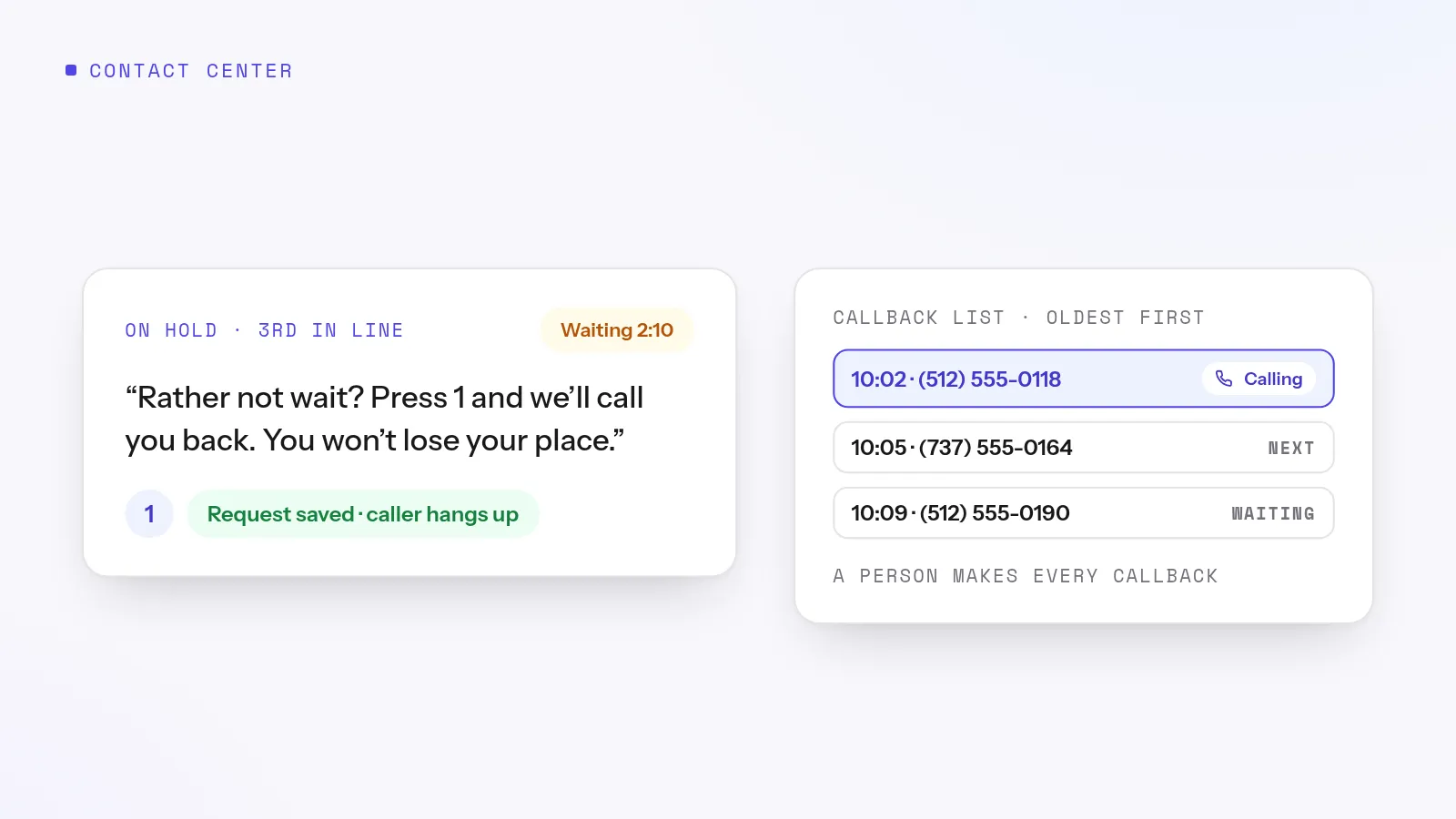
After a wait you choose, the music stops and the offer plays: "Press 1 for a call back."
The caller presses 1 and hangs up. Their request is saved. Pressing nothing keeps them on hold.
The request joins a callback list, ordered by when they asked.
Someone on the team takes the oldest request and calls back.
Waiting on hold vs a callback
Waiting on hold
Queue callback
A long wait
Hold music until someone answers
Press a key and hang up
Hanging up
Lose your place, call again
The request is kept
Calling again
A new wait each time
Joins the open request
Who makes the next call
The caller
Your team
When to make the offer
Too early and you lose callers you would have answered in 30 seconds. Too late and they've already hung up. Look at your abandoned calls by how long the caller had waited: if most give up after about 90 seconds, offer the callback at about 60. On a sales line, where every missed caller costs money, offer it sooner. Some phone systems can also make the offer at a place in line, such as fifth or later, instead of after a set time. A callback is one way out of a long wait; overflow routing covers the others, from a second team to voicemail, and our guide to call queues vs ring groups explains when a line needs a queue at all.
Try it on your own numbers. Give every queue its own hold music and a wait limit, and draw where long waits go in your call flows, from a second team to a voicemail box.
Only promise what you'll keep. Don't say "within ten minutes" unless your team reliably works the list that fast.
Working the callback list
Oldest first. The request that has waited longest goes next, the order the queue would have reached them in.
One owner per request. One person takes each request, so two reps don't call the same customer.
Merge repeats. A caller who asks twice should get one call back, not two.
Count attempts. If nobody answers, try again later and record each try. After two or three, send a text or leave a message.
Missed calls count too. A caller who hung up before the offer still wants an answer. A missed call text back reaches them before they try someone else.
Queue callbacks in Adoptiv
In Adoptiv, the callback offer is a setting on the Queue step of a call flow, and it's off by default until it's switched on for your account. It plays after a wait you set, and keys 1 and 2 accept and keep waiting unless you change them. The offer can be an uploaded recording or typed words read as generated speech. When a caller accepts, they hang up and their number, name and queue are saved; a second request from the same number within four hours joins the open one instead of adding another.
Be clear about what happens next: reports count those requests, but no screen lists them for an agent to work yet, and nothing dials the caller back on its own. Until that changes, the dependable ways out of a long wait are a second team or a voicemail box that someone returns the same day. The offer also belongs to the flow's Queue step, not to the call queue itself, so callers who reach a queue another way, such as a transfer, don't hear it.
Common questions
What is virtual hold?+
Another name for a queue callback: the caller leaves the hold line, keeps their turn, and gets a call back instead of waiting.
Does the caller keep their place in line?+
If the team works requests oldest first, they're called back in roughly the order the queue would have reached them.
Can my team work queue callback requests in Adoptiv?+
Not from a list yet. The offer, which is off by default, saves each request and reports count them, but no screen lists them for an agent to work and nothing calls them back automatically. Until then, send long waits to a second team or a voicemail box someone owns.
When should the callback offer play?+
Just before most of your callers start hanging up. Check how long abandoned callers had waited and set the offer a little earlier.
Adoptiv is the dialer, the CRM and the AI on one platform, where the busywork logs itself and your reps just talk. Try it free for 14 days, with no credit card.
Questions? Call +1 (844) 955-7733. SIYA answers and puts you through to a person.